

What if the “minor” door ding on your fender is actually stripping thousands of dollars from your car’s resale value right now? It’s a valid concern. Most owners worry that any repair will lead to a diminished value report or a mismatched paint job that screams “accident” to a future buyer. You want your vehicle to look pristine, but you’re rightfully anxious about how a fix might impact your car value after PDR when it’s time to sell.
We understand that frustration. Nobody wants to trade a small dent for a permanent record of bodywork. This article explains how Paintless Dent Repair (PDR) prevents diminished value and maximizes your vehicle’s resale potential by preserving its original factory finish. Research shows that unrepaired hail damage can reduce a car’s resale value by 15% to 20%, yet PDR can minimize that loss to as little as 2% for minor damage. We’ll explore why PDR is the superior method for value retention, how to prepare your car for a top-dollar sale, and the specific ways this specialized technique avoids the pitfalls of traditional body shops.
Key Takeaways
- Maintain your vehicle’s market worth by preserving the original factory paint and OEM e-coat to prevent long-term corrosion issues.
- Eliminate the risk of mismatched paint or tell-tale overspray that often occurs with traditional body shop resprays.
- Understand how your car value after PDR stays protected since cosmetic fixes are often recorded as service entries rather than accident reports.
- Increase your financial ROI during trade-ins or lease returns by identifying and repairing high-impact damage in visible zones like doors and body lines.
Understanding Car Value and the “Diminished Value” Trap
Diminished value represents the financial gap between what your vehicle was worth before a dent and its market value after the damage occurred. Even if a ding seems small, it creates a permanent “damage history” that appraisers use to slash your car’s worth. A vehicle featuring its original factory paint is worth significantly more than one that’s been resprayed because the factory finish is a one-time application that cannot be perfectly replicated in a body shop. Maintaining your car value after PDR is a strategic move because it addresses the damage without compromising that original finish.
Professional appraisers and sophisticated buyers don’t just eye-ball your car; they use electronic paint depth gauges to find hidden repairs. If the gauge shows inconsistent thickness, it’s a clear sign that a body shop used filler and a respray to hide damage. This discovery immediately triggers a diminished value claim in the appraiser’s mind. For private buyers, visible dents have a heavy psychological impact. They don’t just see a door ding. They see a history of “parking lot neglect” and a lack of pride in ownership, which they’ll use as leverage to negotiate thousands of dollars off your asking price. Utilizing Paintless Dent Repair (PDR) allows you to fix these issues while keeping the paint depth consistent and the vehicle history clean.
Why Dents are a Red Flag for Vehicle Appraisers
Appraisers are trained to look for signs of structural integrity and long-term care. Dents suggest a history of poor maintenance. When a vehicle arrives with multiple small dings, it signals to the dealership that the car hasn’t been protected. This perception of neglect allows them to drop their offer significantly. They know that unrepaired damage gives them the upper hand in negotiations. Even minor dings on body lines can be interpreted as potential signs of deeper structural issues, making the appraiser more likely to label the car as “fair” rather than “excellent.”
The Financial Impact of Untreated Cosmetic Damage
The difference between “fair” and “excellent” condition categories on a trade-in appraisal can be staggering. Small dings accumulate quickly to create a “totaled” aesthetic, even on a luxury vehicle. According to industry data, unrepaired hail damage can reduce a car’s resale value by 15% to 20%, which often amounts to thousands of dollars in lost equity. Investing in professional repairs is about protecting that equity. For example, a $150 PDR fix can save $1,000 in trade-in value by preventing an appraiser from downgrading your vehicle’s overall condition. Fixing these imperfections before an appraisal ensures your car value after PDR remains at its peak potential.
How Paintless Dent Repair Protects Your Factory Finish
The factory finish on your vehicle is a masterpiece of industrial engineering. It’s applied in a controlled, sterile environment using robotic precision. Most importantly, the paint is baked at temperatures exceeding 300 degrees Fahrenheit. This creates a chemical bond and hardness that air-dried body shop paint simply cannot match. If you care about your car value after PDR, preserving this original layer is your top priority. Once that factory paint is sanded away, it’s gone forever.
Traditional repairs require technicians to grind away the OEM e-coat. This electro-deposition layer is your vehicle’s primary defense against rust and corrosion. Once removed, the bare metal is vulnerable to the elements. PDR avoids this destruction entirely. Specialized technicians use precision tools to access the back of the panel, gently massaging the metal back to its original memory. The process involves zero sanding, no body fillers, and no non-factory pigments. Choosing a professional mobile dent repair service ensures your vehicle remains 100% factory-original.
The Value of OEM Paint and Clear Coat
Factory paint systems are designed for the life of the vehicle. Secondary market resprays often lack the UV resistance and stone-chip durability of the original clear coat. This is why “Certified Pre-Owned” (CPO) programs have strict standards regarding paint thickness. If an appraiser detects a respray using a depth gauge, your car might be disqualified from premium resale categories. Maintaining consistent paint depth across every panel is essential for maximizing car value after PDR. It keeps the vehicle eligible for top-tier valuation programs.
Avoiding the “Bondo Penalty” in Resale
Body filler is a temporary fix that carries a long-term financial penalty. Over several years, these polyester resins naturally shrink and crack. This creates visible “mapping” or rings around the repair site that are impossible to hide. Savvy appraisers use magnets and ultrasonic tools to find these hidden patches of plastic behind the paint. A car with body filler is known as a “story car” in the industry. High-end buyers avoid them. A filler-free car is a “no-stories” car. It sells faster and for a higher price because the cosmetic integrity remains untouched. PDR is the only way to achieve a perfect result without the risk of future filler failure. If you’re still weighing your options, our detailed breakdown of whether paintless dent repair is worth it for your specific situation can help you make a fully informed decision.
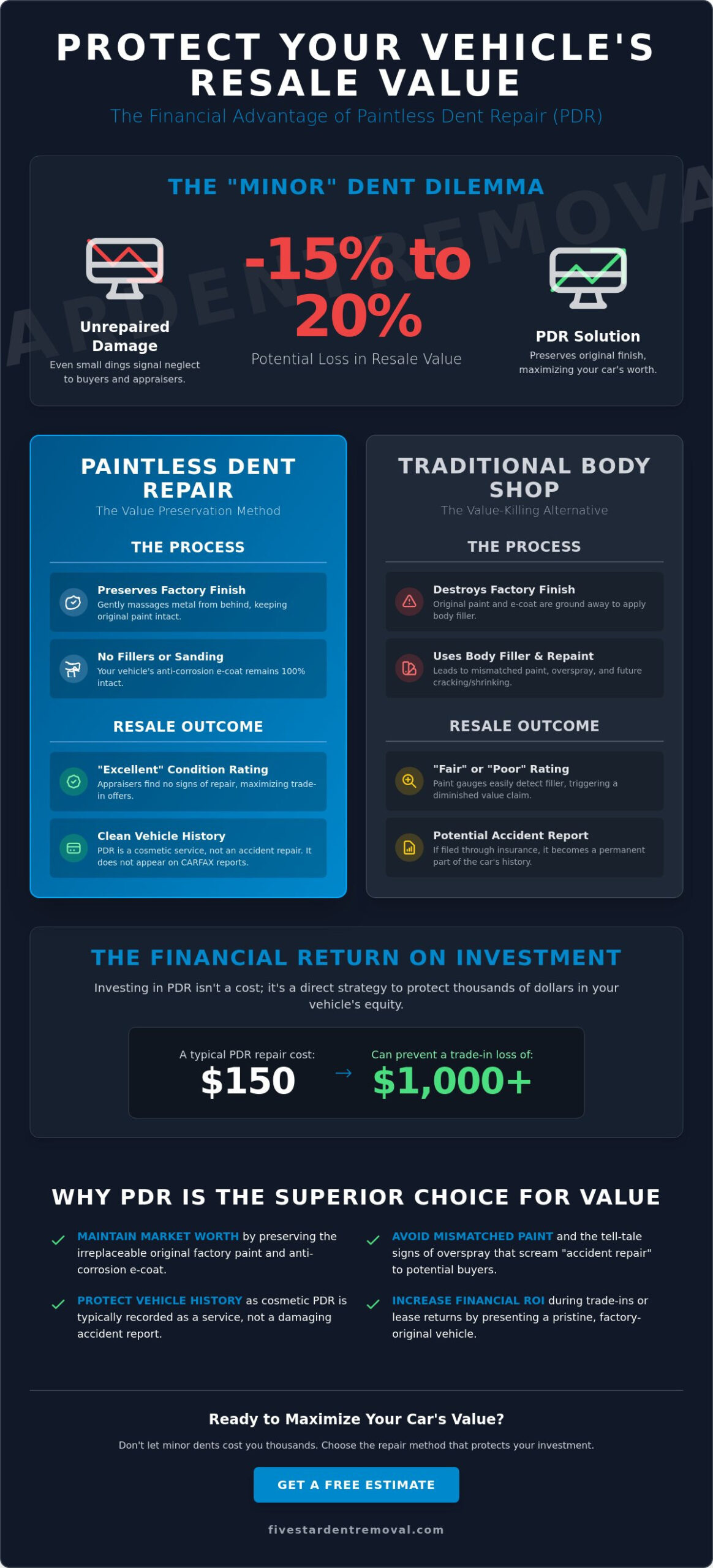
Comparing Resale Outcomes: PDR vs. Traditional Body Work
Choosing between a traditional body shop and Paintless Dent Repair is a decision that impacts your vehicle’s financial future. Traditional methods often involve invasive techniques like grinding, filling, and repainting. These processes introduce variables that can fail over time. PDR is a non-invasive alternative that maintains the structural and cosmetic integrity of the panel. When you consider the car value after PDR, the results are consistently superior because the repair is permanent and undetectable to the naked eye.
Body shops frequently struggle with long-term finish stability. Because they use aftermarket paints and fillers, the repaired area may eventually “sink” or develop a visible ring as the materials cure. PDR doesn’t have this problem. Since no new materials are added to the vehicle, there is nothing to fade, crack, or shrink. The metal is simply returned to its original shape, ensuring the finish remains as durable as the day it left the factory.
The Risk of Color Mismatch and Overspray
Modern metallic and pearl paints are notoriously difficult to match perfectly. To hide a slight color difference, body shops often “blend” the new paint into adjacent, undamaged panels. This means they are sanding and respraying factory paint on parts of the car that were never hit. It’s a high-risk strategy. Expert appraisers look for overspray on rubber gaskets, plastic trim, and wheel wells. These tiny specks of paint are immediate red flags that indicate previous major repairs. PDR eliminates the need for blending entirely. By keeping the repair localized to the dent, you preserve the 100% original color match across the entire vehicle.
Speed as a Value Driver: Opportunity Cost
Time is money, especially when you’re preparing a vehicle for sale. A traditional body shop repair can easily take 14 days or longer. During those two weeks, you cannot show the car to buyers or take it for trade-in appraisals. You’re stuck with a rental car and a depreciating asset you can’t move. In contrast, Five Star Dent Removal offers mobile service that completes most repairs in just a few hours. This rapid turnaround allows you to restore your vehicle’s appearance and get it on the market immediately. Maximizing your car value after PDR means getting the fix done quickly without the logistical headache of a long-term shop stay.
Does PDR Show Up on a CARFAX or Vehicle History Report?
Many owners hesitate to fix dings because they fear a “scar” on the vehicle’s history report. This anxiety is often misplaced. Unlike traditional body work that involves structural changes or major resprays, PDR is largely a cosmetic restoration. Most independent PDR specialists don’t report to central databases like CARFAX. This means that if you pay out-of-pocket, the repair remains entirely off the record. It preserves your car value after PDR by maintaining a pristine history report that appraisers love to see.
Even if an entry appears, it’s rarely listed as an accident. If you go through insurance for hail damage, it’s categorized as a “comprehensive” claim. Buyers view these as environmental events rather than a lack of driver skill. A collision report suggests structural compromise; a service entry for dent removal suggests meticulous upkeep. This distinction is critical when you’re trying to prove the vehicle has never been in a serious wreck.
Reporting Requirements for Cosmetic Repairs
The reporting threshold for automotive repairs varies significantly. Collision centers often have automated systems that link directly to insurance databases. Most PDR shops operate differently. Because the process doesn’t involve replacing parts or structural welding, it’s often categorized as cosmetic maintenance. If you’re concerned about a clean record, paying out-of-pocket is a strategic move. It keeps the transaction between you and the technician. Even with insurance, a comprehensive claim for hail is viewed more favorably by appraisers than a collision claim. It shows the damage was external and environmental, not a result of a vehicle-to-vehicle impact.
Transparency and the Sale Process
A clean CARFAX is a powerful selling tool. It allows you to command a premium price in a crowded market. While the report might be clean, being honest about professional PDR builds significant trust with private buyers. Show them your receipts. Professional documentation serves as proof that you maintained the car to a high standard. It’s important to remember that PDR is considered a restorative service, not a structural repair. This distinction is vital during negotiations. It proves you didn’t just hide damage with paint; you restored the metal to its original form. For a professional result that keeps your history report clean, schedule a mobile dent repair today and protect your car value after PDR.
Strategic PDR: Preparing Your Car for Trade-In or Lease Return
Dealership appraisals are designed to find reasons to lower your offer. High-impact zones like the hood, doors, and sharp body lines are the first places an inspector looks. If these panels are peppered with small dings, the car is immediately categorized as “fair” condition. Strategic PDR acts as a final detailing step that restores curb appeal and forces the appraiser to use “excellent” condition pricing. This shift in category significantly boosts your car value after PDR by removing the visual evidence of neglect.
The financial logic is simple. Dealerships deduct the retail cost of a traditional body shop repair from your trade-in value. You can bypass this penalty by using PDR at a much lower rate before you arrive. For example, a $200 investment in PDR can yield a $1,500 increase in a trade-in offer by moving the car into a higher condition bracket. Before you budget for repairs, understanding exactly what goes into a paintless dent repair estimate — including how panel material, dent depth, and access points affect your final cost — ensures you can plan strategically and avoid surprises. Utilizing professional dent repair for trade in is the most effective way to protect your equity before the final handshake.
The ROI of Fixing Dents Before Selling
A car with zero dents suggests a well-maintained engine and interior. It’s about the message you send to the buyer. Whether you’re selling privately or trading in, the visual integrity of the body panels is your strongest negotiating tool. PDR ensures those body lines remain crisp and the reflections stay straight. It’s a proactive investment that pays for itself multiple times over during the negotiation process. Buyers are willing to pay a premium for a “no-stories” car that looks like it just rolled off the showroom floor. To see exactly how those returns stack up in real numbers, review our comprehensive 2026 ROI guide for paintless dent repair before you decide.
Lease Returns in Alpharetta and North Atlanta
Lease returns in Alpharetta and North Atlanta require even more precision. Inspectors often use the “credit card test” to evaluate damage. If a dent is larger than a standard credit card or if there are multiple dings on a single panel, you’ll likely face an “excessive wear and tear” fee. These fees are notoriously inflated by leasing companies. Luxury brands like BMW and Mercedes-Benz have exceptionally strict cosmetic standards. They expect a factory finish upon return. If you fix dent on car lease return issues using PDR, you avoid these penalties while ensuring the car meets OEM standards. It’s a smart financial move that prevents unexpected invoices weeks after you’ve turned in the keys. Protecting your car value after PDR ensures you walk away from your lease with your wallet intact.
Secure Your Vehicle’s Resale Worth Today
Protecting your vehicle’s original integrity is the most effective way to prevent financial loss when it’s time to sell or trade. By choosing Paintless Dent Repair, you avoid the long-term risks of mismatched paint and shrinking body fillers that cause appraisers to slash your offer. This specialized process keeps your factory e-coat intact and ensures your vehicle history remains as clean as possible. It’s a pragmatic choice that prioritizes your equity over temporary cosmetic patches.
Maximizing your car value after PDR requires high-level precision and technical skill. Five Star Dent Removal brings over 20 years of professional experience to every restoration, with specialized expertise in luxury and high-end vehicle standards. We serve the Alpharetta, Roswell, and North Atlanta communities with both mobile and shop-based options to fit your schedule. Our team focuses on results that are both permanent and undetectable.
Don’t let minor cosmetic damage dictate your vehicle’s market worth or lead to expensive lease return fees. Get a Free PDR Estimate to Protect Your Car’s Value and ensure your investment remains secure. We look forward to providing the reliable, high-quality results your vehicle deserves.
Frequently Asked Questions
Will a PDR repair show up on my car’s CARFAX report?
PDR repairs typically don’t show up on a CARFAX report if you pay for the service out-of-pocket. Most independent specialists aren’t required to report cosmetic maintenance to central databases. If you file an insurance claim, the event might be listed as “damage reported” or “service performed,” but it’s rarely categorized as a collision. This keeps your vehicle history cleaner than a traditional body shop respray.
Does hail damage repair diminish my car’s resale value if I use PDR?
Hail damage repair using PDR is the best way to maintain your vehicle’s worth. Unrepaired hail damage can slash a car’s resale value by 15% to 20%. By using PDR to preserve the original factory finish, you can reduce that value loss to as little as 2% to 5%. This method avoids the diminished value trap associated with repainting multiple panels.
Is it better to fix a dent before trading in my car or let the dealer handle it?
It’s always better to fix a dent before a dealership appraisal. Dealers will deduct the full retail cost of a traditional body shop repair from your trade-in offer. You can often have the same damage fixed for a fraction of that cost using PDR. This small investment ensures your car value after PDR reflects an “excellent” condition rating rather than a “fair” one.
Can PDR fix dents on the body lines of a car without affecting value?
Skilled technicians can successfully repair dents on body lines without negatively affecting the car’s value. These areas are structurally stronger but require specialized tools to massage the metal back to its original memory. Because PDR involves no sanding or body fillers, the structural and cosmetic integrity of the panel remains factory-original.
How much value does a single door ding typically knock off a luxury car?
A single door ding on a luxury vehicle can have a disproportionate impact on its market price. High-end appraisers often use a single visible imperfection as a reason to downgrade a car’s overall condition category. This downgrade can result in a trade-in deduction of $500 to $1,000 or more, depending on the vehicle’s MSRP and the buyer’s level of scrutiny.
Does insurance cover PDR, and will it raise my rates?
Insurance companies almost always cover PDR under the comprehensive portion of your policy. Since hail or falling branches are considered “acts of nature,” these claims generally don’t cause your premiums to rise like a collision claim would. It’s a cost-effective way to restore your car value after PDR without significant out-of-pocket expenses beyond your deductible.
What happens if a PDR technician accidentally cracks the paint?
Professional PDR is performed only when the paint is flexible and the finish is intact. If a technician determines the paint is too brittle or the dent is too sharp, they’ll advise against the repair to avoid cracking. In the rare event that paint fails, the panel would require traditional body work and a respray; this is why choosing an experienced specialist is vital.
How long does a typical PDR value-restoration take?
Most value-restoration repairs are completed in a single day. A standard door ding or minor crease usually takes between one and four hours to resolve. Even extensive hail damage restoration typically only takes one to three days. This speed allows you to get your vehicle back on the road or onto the sales market with minimal delay.