

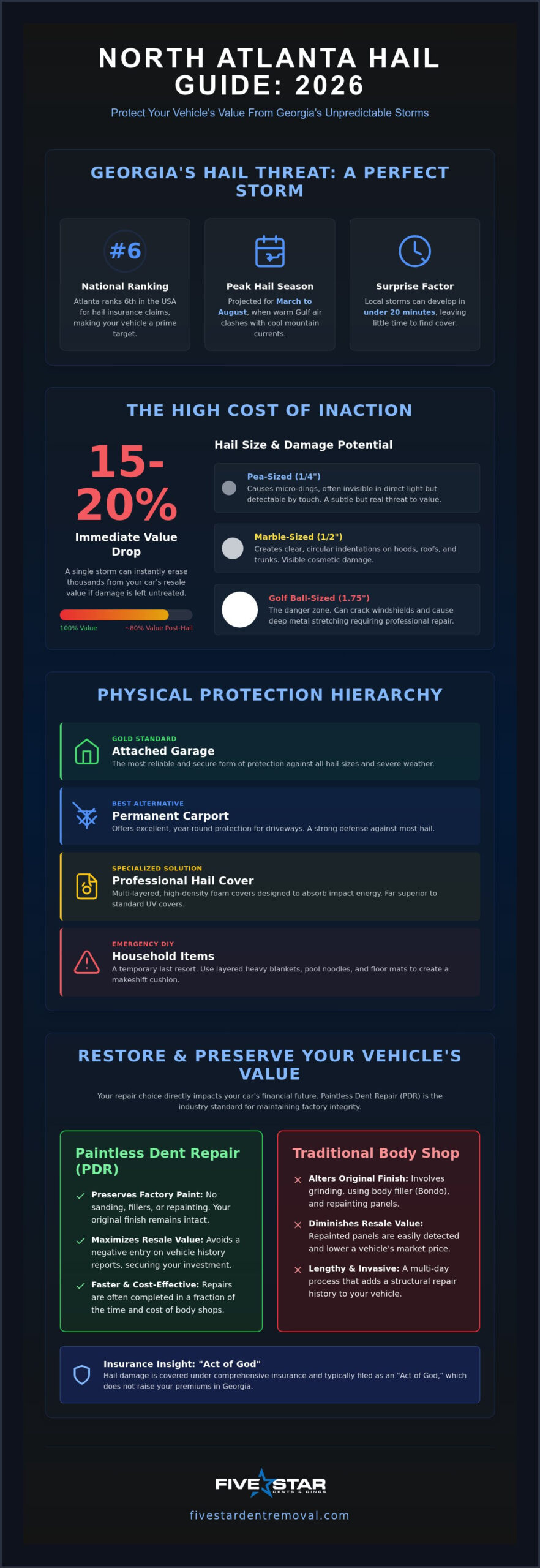
Atlanta currently ranks 6th in the nation for hail insurance claims. This means your vehicle isn’t just at risk during a Georgia storm; it’s a target. You’ve worked hard for your vehicle. Watching the sky turn gray over Alpharetta shouldn’t feel like a direct threat to your financial investment. Most North Atlanta drivers share the same concerns. You worry about high insurance deductibles, the fear of a “totaled” status for cosmetic dents, and the risk of losing your factory paint warranty. At Five Star Dent Removal, we believe you shouldn’t have to choose between a damaged car and a diminished resale price.
This 2026 guide teaches you how to shield your vehicle from Georgia’s unpredictable weather patterns. You’ll also learn how specific repair choices directly impact your hail damage car value when it’s time to trade in or sell. We will explore effective physical protection strategies and provide a clear roadmap for navigating Georgia insurance claims. We also explain why professional Paintless Dent Repair is the superior choice for restoring value while keeping your original finish intact. By the end of this article, you’ll have a pragmatic plan to keep your car pristine and your investment secure.
Key Takeaways
- Identify the peak 2026 North Atlanta hail season to prepare your vehicle before the first storm hits.
- Rank the most effective physical protection methods for Alpharetta driveways, from permanent carports to emergency DIY covers.
- Maximize your hail damage car value by choosing Paintless Dent Repair (PDR) to preserve your original factory paint.
- Navigate Georgia’s comprehensive insurance claims with confidence by understanding how “Act of God” clauses protect your premiums.
- Prioritize driver safety with a clear plan for finding emergency shelter when caught on North Atlanta roads during a storm.
Hail Damage Car Value: How Georgia Storms Impact Your Investment
Untreated hail damage is a silent killer for your vehicle’s resale potential. A single storm can trigger an immediate 15% to 20% drop in your hail damage car value if left unaddressed. Buyers interpret untreated dings as a sign of neglect. They often assume that if the exterior was ignored, the mechanical maintenance was too. In the North Atlanta market, where premium vehicles are the standard, this percentage translates to thousands of dollars lost in a matter of seconds.
The 2026 Georgia hail season is projected to peak between March and August. During these months, our local topography creates a perfect environment for ice formation. Warm, humid moisture from the Gulf of Mexico travels north and collides with the cooler air currents moving off the Appalachian foothills. This atmospheric clash is essentially what causes hail to form so rapidly in our specific region. Understanding the damage threshold is critical for every driver in Fulton and Forsyth counties:
- Pea-sized (1/4 inch): These usually leave micro-dings. They are often invisible in direct sunlight but easily felt by hand.
- Marble-sized (1/2 inch): This size causes clear, circular indentations on hoods, trunks, and roof panels.
- Golf ball-sized (1.75 inches): This is the danger zone. These stones will likely crack windshields and cause deep metal stretching that requires professional intervention.
Why North Atlanta is a Hail Hotspot
Fulton and Forsyth counties sit in a unique geographical pocket where cold air damming near the mountains meets intense summer heat. Recent 2025 and 2026 storm trends show these localized cells are becoming more frequent and intense. Georgia afternoon thunderstorms carry a high “surprise” factor. They often develop in under 20 minutes; this leaves little time for drivers parked in open lots near Avalon or Halcyon to find adequate cover before the ice begins to fall.
Digital Early Warning Systems for 2026
Digital preparation is your first line of defense against sudden storms. We recommend using the NOAA Radar app or setting specific push notifications for local Atlanta news weather alerts. These tools provide the “Lead Time” necessary to move your vehicle into a garage or deploy a protective car cover. A simple 10-minute warning can save you thousands of dollars in repair costs and prevent a permanent stain on your vehicle’s history report.
Best Methods for Physical Hail Protection at Home
Prevention is the only guaranteed way to avoid a loss in equity. While North Atlanta storms are unpredictable, your physical defense strategy shouldn’t be. Protecting the exterior finish is the most effective way to maintain your hail damage car value over time. If your vehicle is left exposed, even a brief storm can result in thousands of dollars in hidden depreciation.
Rank your protection options based on reliability. An attached garage is the gold standard for security. For suburban Alpharetta driveways where garage space is limited, permanent steel carports offer the best secondary defense. If your HOA restricts permanent structures, high-quality portable carports are a pragmatic alternative. Ensure these are anchored with heavy-duty bolts; Georgia wind gusts can easily turn a loose canopy into a dangerous projectile. Insurance for hail damage often depends on your ability to prove you took reasonable precautions, making these physical barriers even more vital.
Professional Hail Covers vs. Standard UV Covers
Standard UV covers are designed for sun and dust. They offer zero protection against high-velocity ice. Professional hail covers, such as the Guardian or Sentinel series, utilize multi-layered padding to absorb impact energy. These specialized covers feature high-density foam that prevents the metal from stretching upon contact. Always prioritize covers with reinforced strapping systems. Secure fitment prevents wind-lofting, which can cause the cover to vibrate and scratch your clear coat during a storm.
DIY Hacks: Blankets, Pool Noodles, and Floor Mats
If a storm catches you unprepared, household items can provide a temporary safety net. Follow this checklist for a safe DIY setup:
- Layer heavy moving blankets: Use at least three layers to create a thick cushion.
- Create a crush zone: Place pool noodles horizontally across the hood and roof before adding blankets. This creates an air gap that dissipates the force of the hail.
- Utilize rubber floor mats: Place your interior mats over the most vulnerable areas, like the sunroof or windshield.
Never use duct tape directly on your vehicle’s paint. The adhesive can bond to the clear coat in humid Georgia weather, leading to permanent damage. Use soft bungee cords or nylon rope to secure your padding. If you discover dings despite your best efforts, our mobile dent repair specialists can assess the damage and provide a precise restoration plan.
What to Do if You Are Caught Driving in a Hailstorm
Safety must remain your absolute priority when a storm hits while you are behind the wheel. While protecting your hail damage car value is important, your physical safety is paramount. Driving during a hailstorm increases the relative velocity of the ice stones. This means a stone falling at 40 mph hits much harder if you are driving toward it at 45 mph. Stop moving as soon as it is safe to do so to reduce the force of impact on your hood and windshield.
The “Angle of Impact” determines whether your glass survives or shatters. Windshields are designed to withstand frontal force, but side windows and sunroofs are far more vulnerable. If you cannot find overhead cover, try to position the vehicle so the hail hits the reinforced windshield rather than the thinner side glass. Once the storm passes, perform a meticulous inspection. Look for “star” chips in the glass and small dings along the roofline. These hidden issues can quickly worsen, leading to a significant drop in resale value if they aren’t documented and repaired immediately.
Finding Emergency Shelter on the Road
Identify safe havens along your route. Gas station canopies, covered parking garages, and even automatic car washes offer excellent protection. In North Atlanta, landmarks like North Point Mall or the parking decks at Avalon serve as reliable “safety hubs” during weather alerts. Avoid the common mistake of stopping under highway overpasses on GA-400 or I-285. This creates a massive traffic hazard and leaves you vulnerable to rear-end collisions in low-visibility conditions. It’s better to exit the highway and find a nearby shopping center with a sturdy overhang.
Protecting Vulnerable Glass and Sunroofs
Glass surfaces are the most expensive and difficult components to restore. Your windshield and sunroof should be your primary focus during an emergency stop. If you are trapped in the open, use your heavy rubber floor mats as emergency shields. Placing a mat over the sunroof or the center of the windshield creates a “sacrificial barrier.” This concept involves using a replaceable item to absorb the initial kinetic energy of the hail, preventing the glass beneath from reaching its breaking point. This simple tactic can prevent an interior-destroying glass failure and keep your repair costs manageable.
Insurance Claims and Protecting Your Vehicle’s Resale Value
Financial recovery is just as important as physical protection. In Georgia, your insurance policy is your primary safety net for maintaining hail damage car value. You must understand that standard liability insurance does not cover weather events. Only comprehensive coverage protects your vehicle from falling ice. Because hail is classified as an “Act of God” in the local market, filing a claim typically won’t result in a direct premium increase. However, the 2026 insurance landscape is seeing stricter underwriting. Accurate documentation is now a requirement, not a suggestion.
Conduct a pre-storm maintenance check before the March peak. Ensure your windshield is free of micro-chips. The kinetic energy of hail can turn a tiny “star” into a full spiderweb crack instantly. Check your window seals for dry rot. Compromised seals allow moisture to enter the cabin during heavy North Atlanta downpours. This leads to secondary damage like mold or electrical issues that further tank your resale value. Being proactive keeps your repair costs manageable and your vehicle history clean.
The Role of Comprehensive Coverage in Georgia
Your deductible is the most critical number in your policy. If your deductible is high, you might find that minor dings aren’t worth a formal claim. Check how much paintless dent repair costs in 2026 to compare professional restoration rates against your out-of-pocket costs. Paying for small repairs yourself keeps your vehicle history report clean. This is a strategic move for owners of high-end vehicles in Alpharetta who plan to sell within the next two years. It prevents the “accident” flag on reports that often scares away premium buyers.
Documentation and Evidence for Resale
Take time-stamped, high-resolution photos of every body panel in early spring. This proves your vehicle’s condition before the storm season began. If you invested in a professional cover or a carport, keep those receipts. Showing a future buyer that you actively protected the car builds trust and justifies a higher asking price. Professional documentation from a PDR specialist is also invaluable. It proves that repairs were done using specialized factory-paint preservation methods rather than invasive bodywork or fillers.
If you suspect your vehicle has sustained even minor dings, contact Five Star Dent Removal for a professional assessment to document the damage before filing your claim.
Restoring Car Value with Paintless Dent Repair (PDR)
Restoring your vehicle after a storm requires a specialized approach that prioritizes your investment. Paintless Dent Repair (PDR) is the industry gold standard for hail restoration. Traditional body shops often rely on invasive techniques like sanding, body fillers, and repainting. These methods permanently alter your vehicle’s exterior and can lead to a significant drop in hail damage car value. PDR is different. It is a non-invasive process that massages the metal back to its original shape without disturbing the factory finish.
Five Star Dent Removal utilizes a meticulous extraction process developed over two decades. Our technicians use specialized light boards and precision tools to identify and remove every individual strike. This level of detail is essential for North Atlanta drivers who demand perfection. We understand that your time is valuable. That’s why we offer mobile PDR options for busy residents in Alpharetta and surrounding Fulton County. We bring professional-grade restoration directly to your home or office, ensuring your day remains uninterrupted while your vehicle is returned to its pre-storm condition.
Why PDR is the Only Fix to Save Value
Preserving your original factory paint is the most effective way to maintain resale value. Once a panel is repainted, it rarely matches the rest of the vehicle perfectly under professional inspection. PDR avoids this risk entirely. It also protects your original factory warranty, as the structural integrity and coating of the panels remain untouched. Speed is another major benefit. While traditional body shops often have weeks-long wait times during the 2026 hail season, PDR can typically be completed in just a few days.
Choosing a Local Specialist in Alpharetta
Experience matters when your vehicle’s finish is on the line. Five Star Dent Removal brings over 20 years of industry expertise to every job. We specialize in complex restorations that other shops might turn away. If you’ve been hit by a storm, the first step is obtaining a professional paintless dent repair estimate to understand the scope of the work. Severe storms often result in deep dings that require specialized crease dent repair techniques. Our team has the advanced technical skills needed to handle these challenging hits, ensuring your hail damage car value is fully restored through precision craftsmanship and honest service.
Secure Your Vehicle’s Future Before the Storm Hits
Proactive protection is the only way to outsmart Georgia’s unpredictable weather. You’ve learned that high-quality physical barriers and digital early warning systems are your best defense. However, even the most prepared drivers in North Atlanta can face unexpected damage. Protecting your hail damage car value requires more than just luck; it demands a restoration method that keeps your factory finish intact. Choosing Paintless Dent Repair ensures your vehicle history remains clean and your resale potential stays high.
Don’t let a single storm dictate your car’s financial future. Five Star Dent Removal offers over 20 years of PDR expertise specifically tailored to the needs of Alpharetta, Roswell, and North Atlanta residents. We specialize in meticulous restorations that preserve your original factory paint and structural integrity. Whether you have a single ding or severe storm damage, our team provides the reliable, high-quality results you deserve. Get a Professional Hail Damage Estimate from Five Star Dent Removal today. Your vehicle is in the hands of seasoned specialists who value precision as much as you do.
Frequently Asked Questions
Does a standard car cover protect against hail damage?
A standard UV car cover does not protect against hail damage. These thin layers are designed for sun protection and lack the impact-absorption material needed to stop ice stones. To prevent dings, you need a specialized hail cover with multiple layers of high-density foam. Without this padding, the kinetic energy of the hail passes directly through the fabric and deforms the metal panels underneath.
Is it worth filing an insurance claim for small hail dents?
It depends on your comprehensive deductible and the total impact on your hail damage car value. If the repair cost is lower than your deductible, paying out of pocket is the smarter choice. This keeps your vehicle history report clean and avoids unnecessary claims. Georgia is a diminished value state, so restoring the car to factory condition is vital for your future resale potential.
Can pool noodles really protect my car from hail?
Pool noodles can protect your car if used correctly as a “crush zone” underneath heavy blankets. By placing the noodles horizontally across the roof and hood, you create an air gap that dissipates the force of the hail. This DIY method is effective for emergency situations when a garage or professional cover isn’t available. Always secure the layers with bungee cords rather than tape.
What is the most vulnerable part of a car during a hailstorm?
The horizontal panels and glass surfaces are the most vulnerable areas during a storm. Your hood, roof, and trunk lid take direct hits from falling ice because of their upward-facing orientation. Windshields and sunroofs are also high-risk zones because glass has a lower impact threshold than steel. Protecting these specific areas first during an emergency can prevent the most expensive repairs and interior damage.
How long do I have to file a hail damage claim in Georgia?
While Georgia law doesn’t set a strict deadline, most insurance policies require you to file a claim within one year of the storm. It’s best to document the damage and contact your provider as soon as possible. Waiting too long can lead to complications, especially if a second storm occurs. Immediate filing ensures that the damage is clearly linked to a specific 2026 weather event.
Can PDR fix large hail dents or just small ones?
Paintless Dent Repair (PDR) can fix both small dings and large, severe hail dents. As long as the paint is not cracked or missing, our specialists can massage large indentations back to their original shape. PDR typically costs 40% to 60% less than traditional body shop repairs. This efficiency allows us to restore vehicles with hundreds of dents quickly while fully preserving the factory finish.
Will my insurance premium go up if I claim hail damage in Georgia?
Typically, filing a hail damage claim in Georgia won’t raise your insurance rates. Hail is classified as an “Act of God,” which falls under your comprehensive coverage rather than collision. Since you aren’t at fault for the weather, insurance companies generally don’t penalize you with higher premiums. Always confirm the specifics of your policy with your agent to understand how localized storm trends affect you.
How do I know if the hail damage cracked my car’s paint?
You can identify cracked paint by looking for spiderwebbing, flaking, or exposed metal inside the dent. Use a bright flashlight at an angle to see if the clear coat is broken. If the paint is intact, PDR is the ideal solution for restoring your hail damage car value. If the paint is chipped or the metal is creased, traditional bodywork might be required to prevent rust.