

What if that “simple” boiling water trick you saw online actually compromises your vehicle’s safety sensors and long-term resale value? Staring at a fresh dent in your plastic bumper is frustrating. You want the damage gone without facing a massive bill. It’s tempting to try a quick fix yourself, but modern 2026 vehicles are more than just molded plastic. They’re hubs for complex Advanced Driver-Assistance Systems (ADAS) that require precise handling and specialized care.
In this guide, you’ll learn how professional plastic bumper dent repair has evolved into a sophisticated thermal management process. We’ll help you determine if your specific damage requires expert intervention or if a DIY approach is safe for your paint and electronics. We’ll preview the latest industry standards, including how Georgia’s HB1117 impacts your repair choices and why maintaining your bumper’s “molecular memory” is the secret to a factory-look finish. Your goal is a smooth, safe restoration that preserves your car’s value. We’re here to show you exactly how to achieve it.
Key Takeaways
- Understand how thermoplastic molecular memory allows specialized technicians to restore your bumper’s original factory shape.
- Discover why precise thermal control between 140°F and 170°F is the secret to a safe and seamless professional restoration.
- Identify the hidden risks of DIY plastic bumper dent repair, including permanent clear coat damage and safety sensor misalignment.
- Follow our step-by-step evaluation guide to spot critical damage indicators like plastic whitening and paint fractures.
- Learn how mobile restoration services provide Alpharetta and Roswell drivers with high-quality results without the body shop wait times.
Understanding Plastic Bumper Dents and Molecular Memory
Modern vehicle bumpers are far more advanced than the rigid metal guards of the past. Today, your car features a sophisticated plastic cover over a reinforcement bar designed specifically for impact absorption and pedestrian safety. These covers are typically made from thermoplastics like Polypropylene. This material is chosen for its unique ability to deform under pressure and, under the right conditions, return to its original shape. This characteristic is known as molecular memory. When you seek professional plastic bumper dent repair, the technician isn’t just “popping” a dent; they’re using thermal energy to remind the plastic of its factory-molded form.
Achieving a permanent restoration requires more than a quick pull. In 2026, vehicle materials have become increasingly complex to accommodate lightweighting goals and integrated electronics. A simple physical pop often leaves internal stresses within the material. Without a professional thermal set, the plastic remains under tension. This tension eventually wins, causing the dent to reappear or the paint to fail. Professional repair focuses on reaching a specific temperature window where the plastic becomes pliable enough to reshape without compromising its structural integrity.
The Role of Thermoplastics in Modern Car Design
Manufacturers prioritize thermoplastics because they’re lightweight, durable, and cost-effective. These materials, including Polypropylene and various TPO blends, offer significant benefits for fuel efficiency and safety. Unlike metal panels that stretch and deform permanently upon impact, these plastics are designed to flex. However, they react differently to environmental factors. While metal requires high-force pulling and hammers, plastic responds to controlled heat. This makes the restoration process cleaner and more efficient when handled by specialists who understand the material’s specific thermal limits. Precision is the difference between a smooth finish and a warped bumper cover.
Why Some Bumper Dents Pop Back In
The “rebound effect” is a common frustration for DIY enthusiasts. You might successfully push a dent out using hot water, only to find the blemish has returned the next morning. This happens because the plastic’s internal structure wasn’t properly “reset.” If the material isn’t held in the correct position while it cools, the molecular memory pulls it back toward the damaged state. Professional plastic bumper dent repair involves a critical cooling phase. By maintaining the correct shape while the temperature drops, technicians lock the molecules into the desired factory position. This ensures the repair is permanent and the surface remains flush with the rest of the vehicle body.
The Science of Heat: How Professional Bumper Restoration Works
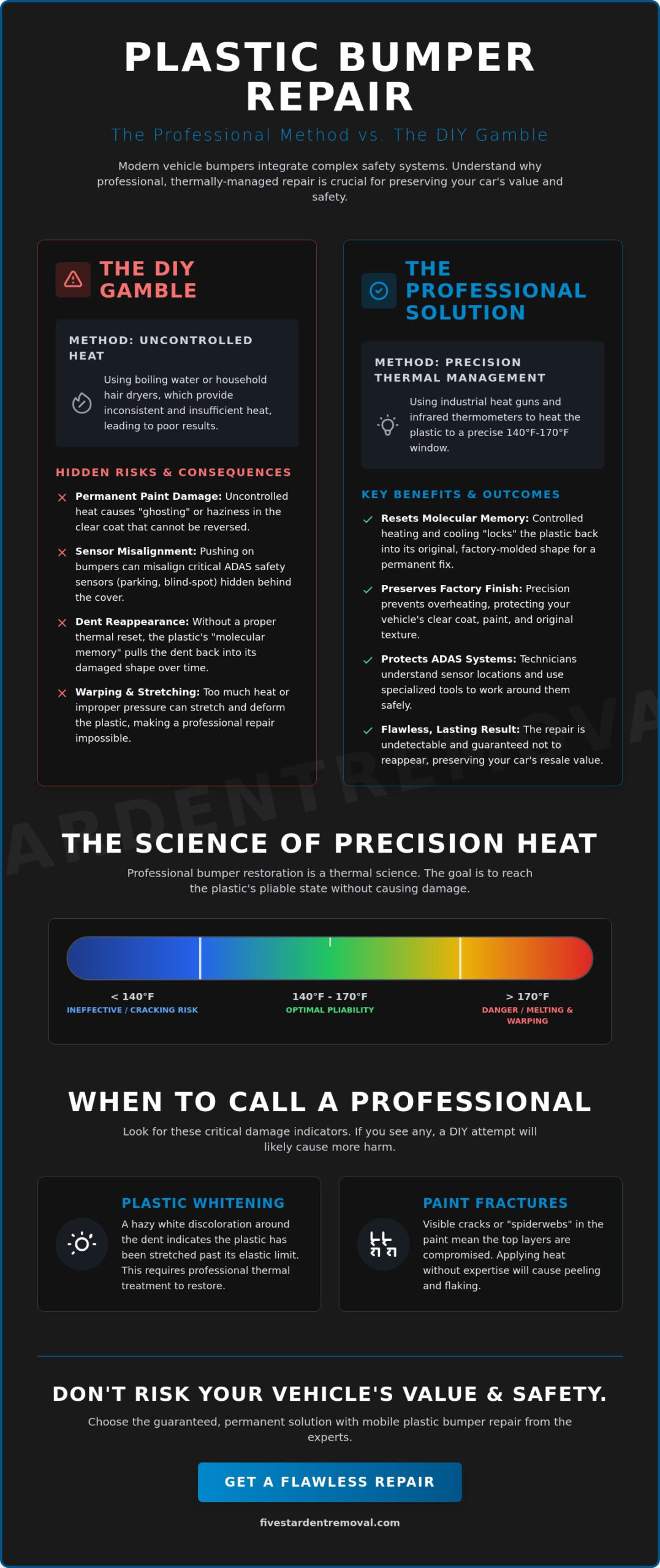
Professional plastic bumper dent repair is a disciplined process rooted in thermal dynamics. It requires more than just brute force. Technicians rely on industrial heat guns and infrared thermometers to maintain absolute control over the material. The objective is to reach a precise temperature window, typically between 140°F and 170°F. Within this specific range, the thermoplastic becomes pliable enough to manipulate without compromising the factory finish or the structural integrity of the bumper cover. Precision is non-negotiable here. If the temperature drops too low, the plastic can crack under pressure. If it climbs too high, you risk permanent deformation.
Access is the next critical factor. Unlike some surface-level DIY attempts, professional restoration usually requires reaching behind the bumper cover. This allows the technician to apply consistent, even pressure directly to the source of the displacement. By combining rear access with a specialized “massage” technique, specialists can ease the plastic back into its original position. They start at the outer edges of the tension, known as the crowns, and work toward the center. This methodical approach prevents the material from stretching and ensures a flush, factory-look result. For those seeking a seamless finish, professional bumper repair provides the technical precision that home methods lack.
Precision Heating vs. Uncontrolled DIY Heat
DIY guides often suggest using a household hair dryer. This is a mistake. Hair dryers lack the consistent BTUs required to penetrate thick automotive plastics evenly. This leads to uneven heating, which causes “ghosting” or a hazy texture on the clear coat. Professional technicians monitor surface temperatures in real-time with infrared sensors to avoid these risks. Overheating can lead to melting or warping that is impossible to reverse. Once the shape is restored, specialists use rapid cooling sprays. These sprays instantly “lock” the plastic molecules into their factory position, preventing the dent from rebounding as the material settles.
Specialized PDR Tools for Plastic Manipulation
Standard metal Paintless Dent Repair (PDR) tools are often too aggressive for soft plastic surfaces. Instead, technicians use adapted rods and paddles with rounded or capped tips. These specialized tools distribute pressure across a wider surface area. This prevents the creation of “high spots” or sharp protrusions during the pushing process. By utilizing these wide-diameter tools, specialists can smooth out the texture of the plastic while it is still in its thermal window. This ensures the final surface is free of the ripples or “orange peel” textures often left behind by amateur repair attempts.
DIY vs. Professional Plastic Bumper Repair: Risks You Should Know
Social media often simplifies complex automotive issues into “life hacks” that promise instant results for pennies. The “boiling water trick” is a prime example. While pouring hot water on a dent might occasionally cause a panel to pop, it lacks the precision required for a permanent, safe restoration. Professional plastic bumper dent repair is a controlled industrial process. It addresses the structural integrity of the thermoplastic and the sensitive electronics housed directly behind the bumper cover. Choosing a DIY route isn’t just a matter of convenience; it’s a high-stakes gamble with your vehicle’s safety systems and resale value.
Preserving the factory finish is the most effective way to maintain your car’s worth. Once you introduce uncontrolled heat or aggressive physical force, you risk permanent damage that a professional can’t easily undo. In 2026, with the average passenger vehicle age reaching 12.5 years, keeping your car in top condition is more important than ever for long-term financial sensibility. A botched DIY attempt often leads to a full bumper replacement, which typically costs between $800 and $2,000 for standard vehicles. Professional intervention prevents these unnecessary expenses by focusing on precision restoration over part replacement.
The Hidden Danger to Bumper Sensors (ADAS)
Modern bumpers are no longer just aesthetic covers. They’re critical housings for Advanced Driver Assistance Systems (ADAS). Blind-spot monitors, parking sensors, and radar units are mounted directly behind the plastic surface. These components are extremely sensitive to temperature. Using an unmonitored heat source like a torch or even a high-powered hair dryer can fry the delicate internal circuitry of these sensors. If a sensor is damaged or even slightly misaligned during a DIY attempt, it requires expert recalibration. Industry data confirms that recalibration of sensors and cameras can add $300 to $800 to your total repair bill. A professional approach ensures these safety systems remain functional and compliant with Georgia’s House Bill 1117, which reinforces the importance of following OEM repair procedures.
Paint Integrity and Clear Coat Stress
Your vehicle’s paint and the underlying plastic expand at different rates when heated. This elasticity gap is where most DIY attempts fail. If you push a dent out too quickly or without the correct thermal preparation, the clear coat will “spiderweb.” These are microscopic cracks that eventually lead to peeling and delamination. Once the clear coat is compromised, the only solution is a costly respray. Professional technicians use a methodical “massage” technique to ease the material back into place without overstressing the finish. For residents looking to maintain their vehicle’s aesthetic appeal, choosing bumper repair Alpharetta ensures your factory paint remains intact. We prioritize techniques that protect the molecular bond of your paint, preventing the need for major body shop work.
Evaluating Your Bumper Damage: A Step-by-Step Guide
Determining if your vehicle is a candidate for plastic bumper dent repair starts with a thorough cleaning. Dirt and road grime often hide fine cracks or deep gouges that change the repair strategy. Once the surface is clear, inspect the damage under a bright, direct light source. You’re looking for more than just the depth of the dent. Check for paint fractures, “plastic stretching” (whitening), or deep punctures that might require replacement rather than restoration. Verify if you can reach the back of the panel through the wheel well or from under the chassis. Finally, test your parking sensors and blind-spot monitors. If the system throws an error code, the impact has likely moved beyond surface-level damage.
Assessing the location is just as important as the depth. Dents located on flat surfaces are generally easier to manage. However, damage that crosses a body line or wraps around a corner requires a different level of expertise. These areas are reinforced for structural rigidity. This makes the plastic much stiffer and less responsive to basic heating methods. If the dent is near a sensor housing, the risk of misaligning the ADAS components increases significantly. Proper evaluation ensures you don’t turn a minor plastic bumper dent repair project into a functional safety failure.
Identifying “Stretched” Plastic
Look closely at the center of the impact for white stress marks. This whitening indicates that the thermoplastic has been overextended beyond its elastic limit. When plastic stretches this way, it cannot return to a perfectly flat state through heat alone. While professional techniques can significantly improve the appearance, “stretched” plastic often retains a slight ripple or texture. Use this “go/no-go” checklist for DIY attempts: Is the paint 100% intact? Is the dent away from the edges? Can you reach the back easily? Are all sensors functional? If you answer “no” to any of these, professional intervention is required to avoid permanent clear coat failure.
When to Call a Professional Immediately
Certain indicators signal that a bumper is beyond a simple home fix. Cracked mounting tabs or structural fractures mean the bumper cover is no longer secure. Additionally, crease dent repair on the sharp edges or body lines of a bumper is notoriously difficult. These high-tension areas require specialized paddles and precise thermal control to manipulate without snapping the plastic. If your vehicle is still under a factory warranty, professional documentation of the repair is essential. Georgia drivers should also remember that insurance policies must cover repairs made in accordance with OEM procedures, making professional shops the safest choice for compliance.
Get an expert opinion before you attempt to move the damage yourself. Contact Five Star Dent Removal for a professional assessment of your bumper’s condition.
Professional Bumper Dent Removal in Alpharetta and North Atlanta
Five Star Dent Removal prioritizes restoration over unnecessary replacement. Many local body shops suggest a full bumper replacement for minor damage. This often involves excessive costs and the loss of your factory paint finish. Our specialized plastic bumper dent repair process focuses on reshaping the original thermoplastic cover. By utilizing the thermal techniques and precision tools discussed earlier, we restore the panel’s integrity without the need for fillers or resprays. This approach maintains the seamless look of your vehicle and protects the ADAS sensors that are critical in 2026 models. We believe in high-quality results that preserve your car’s value and structural safety.
Cost efficiency is a major benefit for North Atlanta drivers. As noted in our guide, a full bumper replacement can easily exceed $2,000 when you factor in labor, parts, and sensor recalibration. Professional repair offers a pragmatic alternative that saves significant money while delivering factory-quality results. We provide high-value solutions that respect your budget and your time. Our team is dedicated to 100% customer satisfaction, ensuring every vehicle in the Alpharetta and Roswell area receives the precision care it deserves. It’s about providing a reliable, no-nonsense service that you can trust.
Mobile Service for Busy Professionals
Time is a luxury for residents in Buckhead and Dunwoody. Taking your car to a shop for several days isn’t always an option. We bring our specialized equipment directly to your home or office. Most plastic bumper repairs are completed in under two hours. This mobile approach eliminates the friction and inconvenience of traditional body shops. For cosmetic issues, our on-site bumper scuff repair service ensures your car looks its best without disrupting your busy schedule. We focus on speed, cost-effectiveness, and efficiency to get you back on the road quickly.
The Five Star Advantage: Quality and Trust
Experience matters when dealing with complex modern thermoplastics. Five Star Dent Removal brings over 20 years of expertise to the North Atlanta region. We’ve built our reputation on honesty and technical skill. We provide clear, transparent information about bumper dent removal cost so you can make an informed decision. Transparency is our standard. If you’re dealing with unsightly damage, simply text a photo to our team. We’ll provide a rapid, honest estimate that reflects our commitment to excellence and regional reliability. Don’t let a minor dent compromise your vehicle’s look or safety.
Restore Your Bumper’s Factory Finish Today
Modern bumpers are more than just cosmetic covers; they’re intricate systems where molecular memory and sensitive ADAS electronics meet. Attempting a home fix often leads to clear coat failure or costly sensor damage. Professional plastic bumper dent repair provides a permanent solution that respects the structural integrity and resale value of your vehicle. By choosing restoration over replacement, you avoid the high costs and long wait times associated with traditional collision centers.
Five Star Dent Removal brings over 20 years of local expertise to the Alpharetta and North Atlanta region. We specialize in preserving your original factory paint through precise thermal manipulation. Our mobile service delivers these high-quality results directly to your home or office for maximum convenience. Don’t let a minor impact compromise your car’s look or safety. Get a Free Bumper Repair Estimate from Five Star Dent Removal and let our specialists restore your peace of mind. Your vehicle is in the hands of seasoned professionals who value quality above all else.
Frequently Asked Questions
Can boiling water really fix a dent in a plastic bumper?
Boiling water can occasionally pop out a shallow dent, but it lacks the thermal precision required for a permanent restoration. This method doesn’t reach the consistent industrial temperatures needed to reset the material’s molecular memory. It also carries a high risk of scalding the user or causing the factory clear coat to delaminate from the plastic surface.
Will a hair dryer work for bumper dent removal?
Household hair dryers generally don’t produce the consistent BTUs necessary to penetrate thick automotive thermoplastics. While they provide some heat, they often fail to reach the critical 140°F to 170°F window required for safe manipulation. This leads to uneven heating, which can haze the paint finish or cause the dent to rebound shortly after the plastic cools.
How much does it cost to fix a dent in a plastic bumper professionally?
Professional costs depend on the damage depth, location, and the presence of integrated ADAS sensors. While minor plastic bumper dent repair is far more affordable than a full replacement, the final price reflects the technical expertise and specialized tools used. Most owners find that professional restoration provides substantial savings compared to the typical $800 to $2,000 cost of a new bumper assembly.
What happens if I accidentally melt the plastic while heating it?
Melting the bumper cover causes permanent structural deformation that standard restoration techniques cannot fix. Overheating destroys the polymer bonds, leading to a warped texture or “ghosting” that remains visible even after cooling. Once the plastic is melted or scorched, a full bumper replacement is usually the only way to restore the vehicle’s original appearance and safety standards.
Are bumper sensors affected by dent repair?
Yes, modern safety sensors are extremely sensitive to both the initial impact and the heat applied during repair. Professional technicians use infrared thermometers to ensure temperatures stay within a safe range for delicate electronics. If a sensor is misaligned or damaged, it requires specialized recalibration to ensure blind-spot monitors and parking assists function according to OEM specifications.
Can a cracked plastic bumper be repaired without replacing the whole part?
Small cracks can often be restored using specialized adhesives or plastic welding techniques. However, if the fracture affects the mounting tabs or structural integrity, a replacement is often necessary for safety. Specialists evaluate each crack to ensure the final result complies with Georgia’s HB1117 regulations regarding original equipment manufacturer repair procedures.
How long does a professional plastic bumper dent repair take?
Most professional mobile repairs are completed in approximately one to two hours. This rapid turnaround is possible because specialists use industrial-grade heat sources and rapid-cooling sprays to lock the plastic into place quickly. This efficiency allows busy professionals in North Atlanta to have their vehicles restored at their home or office without losing their car to a shop for days.
Is it better to replace or repair a dented plastic bumper?
Repair is the preferred choice when the factory paint is intact and the structural supports are undamaged. Restoration is more cost-effective and preserves your original factory finish, which is vital for maintaining vehicle resale value. Replacement is only recommended when the damage includes deep punctures, broken mounting points, or non-functional electronic components that cannot be safely recalibrated.