

The tape measure in your glovebox is the least reliable tool for determining if your car needs a body shop or a specialist. Most drivers assume that a dent the size of a dinner plate requires a full respray and a week in a rental car. You’re likely staring at your fender and wondering what size dent can PDR fix before you’re forced to settle for expensive traditional repairs. It’s stressful to think about losing your factory paint quality and your vehicle’s value just to fix a surface blemish.
We understand the frustration of facing high body shop quotes and the inconvenience of leaving your car at a collision center for weeks. This guide explains why the diameter of a dent matters far less than metal integrity and depth. You’ll learn exactly when your vehicle is a candidate for professional PDR. We’ll examine how 2026 technology, including advanced adhesive systems and laser diagnostics, allows specialists to restore massive damage without the need for fillers or sanding.
Key Takeaways
- Specialized tools in 2026 now allow for effective repairs on large panels that were previously restricted to traditional body shops.
- Discover why depth and location on the panel are the true deciding factors when asking what size dent can PDR fix on your car.
- Distinguish between minor dings and complex 10-inch creases to determine which repair path best preserves your original factory finish.
- Learn to spot the “Cracked Paint” rule and structural issues that serve as clear boundaries for the limits of paintless restoration.
- Find out how the Five Star Dent Removal assessment process in North Atlanta identifies technical complexities that digital photos often hide.
The Size Myth: Why PDR for Large Dents is More Common in 2026
Stop measuring your damage in inches. Many car owners believe that once a dent exceeds the size of a golf ball, they’re bound for a traditional body shop. This outdated thinking ignores the massive leaps in automotive technology over the last decade. In 2026, asking what size dent can PDR fix often leads to surprising answers. Professional technicians now routinely tackle damage that would have been deemed “unrepairable” just five years ago. PDR is no longer a niche service reserved for hail; it’s a primary solution for significant body damage and large-scale impacts.
Defining PDR Capability in the Modern Era
Paintless Dent Repair (PDR) is a specialized method that restores a vehicle’s body to its original factory condition without the use of paint or body filler. Modern automotive finishes are engineered with high elasticity. This flexibility allows the paint to stretch alongside the metal during an impact rather than cracking immediately. Understanding how paintless dent removal works is essential for any car owner. It relies on the “memory” of the metal. If the paint remains intact, the size of the dent is secondary to the technical complexity of the damage. We focus on the metal’s ability to return to its original shape through methodical massage and precision tools.
The Evolution of PDR Tools and Techniques
The shift toward larger repairs is driven by professional-grade equipment. High-strength glue pulling systems allow us to apply uniform pressure across massive surface areas. We no longer rely solely on access points behind the panel. Advanced LED lighting systems now reveal micro-imperfections that were invisible to the naked eye in previous years. These tools allow for high-precision crease dent repair on panels that span several feet. In 2026, the process is further enhanced by several key advancements:
- AI-Driven Analysis: Software that analyzes damage patterns to suggest optimal repair strategies.
- Laser Diagnostics: Technology that detects the exact depth of a dent for surgical accuracy.
- Thermal Control: Precise heat application that makes metal more malleable without damaging the finish.
Expertise has evolved from simply removing a ding to achieving total perfection on complex surfaces. When considering what size dent can PDR fix, remember that a shallow 10-inch dent is often easier to resolve than a sharp, one-inch puncture. Our focus is on metal manipulation and structural integrity. We prioritize the preservation of your factory finish. This approach avoids the color-matching issues and resale value drops associated with traditional repainting. Understanding the full picture of PDR vs traditional body repair helps clarify why preserving your original paint is the superior long-term choice for your vehicle’s market value. We aren’t just hiding damage; we’re erasing it by restoring the metal’s original topography. It’s a faster, cleaner, and more efficient way to handle large-scale impacts.
The 3 Critical Factors: Beyond Diameter and Inches
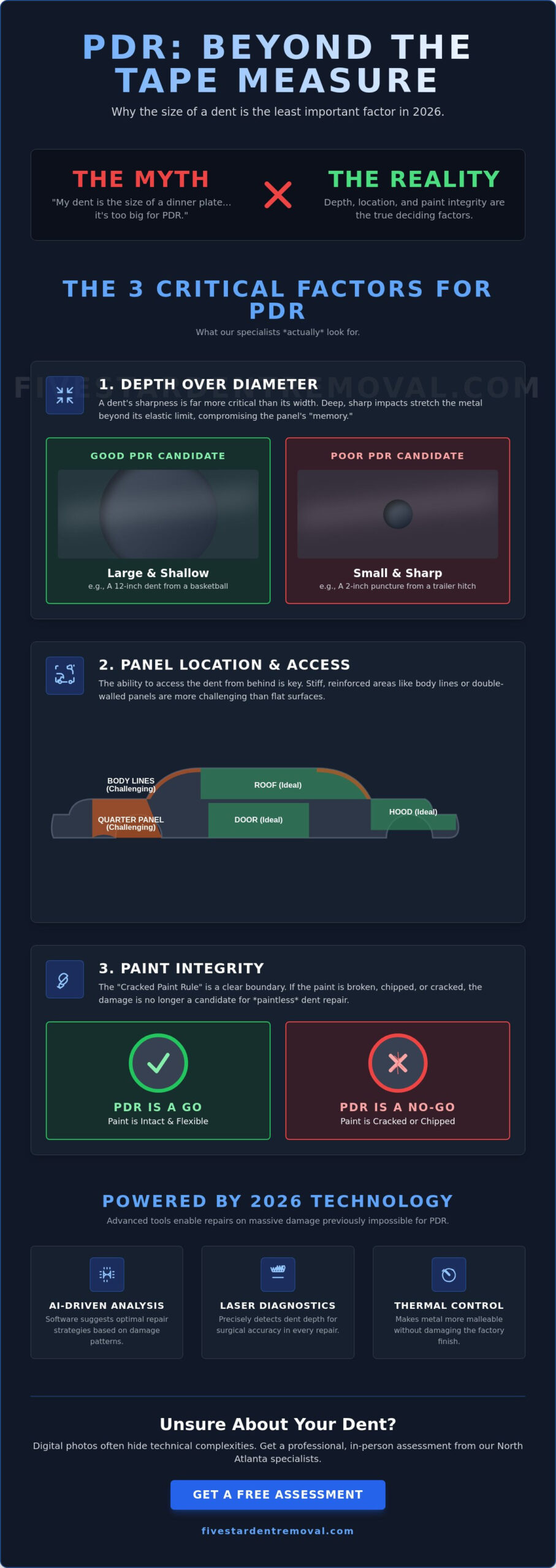
Measuring damage with a ruler tells only half the story. While most drivers ask what size dent can PDR fix, professional technicians look for three specific technical variables. These factors determine if a panel can be massaged back to perfection or if it requires a traditional body shop visit. Understanding the physics of your car’s exterior helps set realistic expectations for the repair process. We prioritize the structural integrity of the metal over simple measurements.
Depth vs. Diameter: Which Matters More?
Depth is significantly more dangerous than width. A shallow 12-inch dent from a rogue basketball is often easier to resolve than a sharp, deep 2-inch puncture from a trailer hitch. Sharp impacts stretch the metal beyond its elastic limit. When this happens, the metal becomes “too long” for the space it occupies. Metal memory is the tendency of a panel to return to its factory shape. If the impact is too deep, that memory is compromised. The metal loses its ability to shrink back into place, leading to the “point of no return.” Technicians must manage this tension carefully to avoid high spots or distorted reflections.
Panel Location and Access Constraints
Access dictates the success of any repair. Dents located on flat, open surfaces like door skins or hoods are ideal candidates for PDR. However, damage on body lines or structural creases presents a higher challenge. These areas are reinforced for safety and rigidity, making the metal much stiffer. Access becomes even more difficult on double-walled panels. These sections, common on hoods and trunk lids, have an inner structural frame that blocks traditional PDR rods. In these cases, we often utilize advanced glue pulling systems to work from the outside. If you’re unsure about your damage, a quick mobile dent repair assessment can clarify your options.
The edge of a panel is the most difficult area to restore. Metal at the very edge of a door or fender is hemmed and reinforced. This leaves almost no room for tool leverage and creates a high risk of paint failure if pushed too hard. When determining what size dent can PDR fix, we evaluate several key physical boundaries:
- Edge Proximity: Damage within an inch of a panel edge is harder to leverage.
- Body Lines: Impacts that “break” a body line require surgical precision to realign.
- Material Type: Aluminum behaves differently than steel and requires specific heat-based techniques.
We focus on a precise, durable result over a “good enough” fix. Our goal is to ensure your vehicle looks as if the accident never happened. By analyzing these three factors, we can provide an honest assessment of whether PDR is the right path for your specific situation.
Categorizing Damage: From Dings to 10-Inch Creases
Size categories provide a roadmap for repair expectations. While we previously discussed why depth and location matter, the physical footprint of the damage still dictates the tools and time required for a restoration. When evaluating what size dent can PDR fix, we categorize damage into three distinct tiers. Each tier requires a different level of technical intervention to ensure the metal returns to its factory state without compromising the finish.
The Repairability Framework
Technicians use a success-rate framework to determine the best approach for your vehicle. Industry data shows a 98% chance that standard dents can be resolved using PDR techniques, but the precision required changes as the footprint grows. We break it down by these common sizes:
- Minor Dings (0-2 inches): These are the “bread and butter” of the industry. These small impacts usually have a 99% success rate. They are often resolved quickly through high-precision massage from behind the panel.
- Medium Dents (3-8 inches): Common in parking lot collisions or low-speed impacts. These typically see a 90-95% restoration rate. Success depends heavily on whether the metal was stretched during the initial hit.
- Large Damage (10+ inches): This is the “Expert Only” zone. Resolving massive impacts requires a combination of advanced glue pulling and controlled heat. For high-value vehicles, this often involves luxury car dent repair techniques to maintain the strict standards of premium automotive finishes.
Why Creases Change the Math
Length is often a secondary concern when a crease is involved. A “soft” 10-inch dent is much easier to fix than a “sharp” 3-inch crease. Sharp creases actually compress the molecular structure of the paint and the underlying metal. If the fold is too tight, the paint can become brittle and lose its bond with the surface. This is why body line dents require such extreme precision. We must carefully “unfold” the metal at the microscopic level to avoid cracking the clear coat. In 2026, we use specialized lighting to track these folds and ensure the pressure is applied exactly where the metal is most stressed. This surgical approach allows us to remove 80-90% of even the most complex dents, provided the paint remains flexible and intact. We prioritize a methodical, slow release of tension to keep your factory finish perfect.
When is a Dent ‘Too Big’ or ‘Too Deep’ for PDR?
While modern techniques have expanded the boundaries of what’s possible, physical limitations still exist. Most drivers ask what size dent can PDR fix, but the answer often depends on the condition of the surface rather than the measurement of the impact. PDR is a restoration process, not a miracle cure. There are specific scenarios where traditional body shop methods become the safer and more pragmatic choice for your vehicle’s longevity. A thorough understanding of PDR vs traditional body repair can help you make the most informed decision when your damage reaches these physical limits.
The Importance of Paint Integrity
Paint is the most significant limiting factor in any repair. You must preserve factory paint to maintain your car’s resale value and corrosion resistance. If the impact has already caused the paint to chip, flake, or crack, PDR alone cannot restore the panel. We look for “spider webbing” or micro-cracks in the clear coat. These tiny fractures indicate that the finish has been stretched beyond its elastic limit. During large repairs, our technicians use controlled heat to increase paint flexibility. This prevents further cracking as we manipulate the metal. However, if the primer is visible or the metal is exposed, the panel requires a respray that PDR cannot provide.
Signs of Structural or Frame Damage
Safety is our non-negotiable priority. Large dents often involve more than just the outer skin of the vehicle. If an impact is deep enough to reach the inner safety structure, such as the intrusion beams inside a door, PDR may not be suitable. We also monitor panel gaps and overall alignment. When an impact shifts the way a hood latches or how a door meets the fender, it suggests structural movement. Stretched metal that has lost its structural integrity will feel “soft” or “oil-can,” meaning it pops back and forth without holding a shape. In these cases, the metal has been physically thinned by the force of the accident. Five Star Dent Removal prioritizes safety over cosmetic fixes. If we determine that a repair compromises the vehicle’s crashworthiness, we’ll recommend a traditional collision center. If your damage is purely cosmetic, you can schedule a professional PDR assessment to see if your car is a candidate for our specialized restoration process.
Knowing when to walk away from a PDR attempt is the mark of a true specialist. Attempting to “force” a repair on over-stretched metal or damaged paint often results in a finish that looks wavy or distorted. When considering what size dent can PDR fix, remember that a high-quality result is better than a cheap, incomplete one. If the metal has reached its physical limit, a traditional repair ensures the panel remains safe and aesthetically correct.
Professional Assessment in North Atlanta: Getting an Expert Opinion
Digital photos provide a useful starting point, but they rarely tell the whole story. While you might send a snapshot to ask what size dent can PDR fix, a two-dimensional image cannot capture the “flow” of the metal or the precise depth of a crease. Professional assessment requires seeing how light reflects off the damage from multiple angles. At Five Star Dent Removal, we use specialized line boards to reveal the true topography of the impact. This level of detail is essential for determining if a large dent is a candidate for restoration or if the metal has been stretched beyond its physical limits.
The Five Star Valuation Strategy
Our assessment process focuses on the most cost-effective path for your specific situation. We don’t just look at the damage; we consider the vehicle’s future. If you are preparing for a lease return or looking to maximize trade-in value, PDR is almost always the superior choice. It keeps the original factory finish intact, which prevents the “diminished value” claim often triggered by traditional body shop reports. We provide transparent estimates that explain the technical challenges of your repair. If a dent is in a high-tension area or near a reinforced edge, we’ll explain exactly how that affects the process and the expected outcome.
Convenient Local Solutions in Alpharetta
Choosing between mobile and shop-based service depends on the complexity of the damage. Our mobile dent repair capabilities are perfect for minor dings and medium-sized dents in your driveway or office parking lot. However, for large-scale impacts or complex creases, our Alpharetta shop provides a controlled environment with superior lighting and specialized leverage points. This facility allows us to tackle the “Expert Only” repairs discussed earlier with surgical precision. We serve the entire North Atlanta region, including Roswell and Milton, with a commitment to high-quality craftsmanship and no-nonsense service.
Don’t guess about the repairability of your vehicle. Every impact is unique, and the technical limits of what size dent can PDR fix are constantly expanding with 2026 technology. We prioritize your time and your car’s value by offering expert guidance from the very first contact. You can get a paintless dent repair estimate today to see if your damage qualifies for our specialized restoration process. We’ll provide a clear, professional opinion so you can make an informed decision without the pressure of a traditional collision center.
Protecting Your Vehicle’s Future with Precision Restoration
Modern automotive repair prioritizes precision over replacement. The technical boundaries of what size dent can PDR fix have expanded significantly. Success now depends on metal elasticity and paint integrity rather than a simple diameter measurement. Choosing this non-invasive path protects your factory finish and prevents the diminished value associated with traditional repainting. It’s the most pragmatic way to handle significant body damage while maintaining your car’s long-term worth.
Five Star Dent Removal provides over 20 years of local experience in Alpharetta. Our Certified PDR Specialists utilize advanced techniques to handle everything from minor dings to complex creases. With both mobile and shop-based repair options available, we deliver the flexibility and technical expertise your vehicle needs. We focus on results that look perfect and last for the life of your vehicle.
Get a Free Professional PDR Estimate for Your Large Dent.
Trust your vehicle to a team that balances hardworking craftsmanship with a service-first attitude. We’re ready to help you restore your car’s appearance and value today.
Frequently Asked Questions
Can PDR fix a dent the size of a basketball?
Yes, PDR can often resolve basketball-sized damage provided the metal isn’t severely over-stretched or creased. When asking what size dent can PDR fix, car owners are often surprised to learn that large, shallow impacts on hoods or roofs are ideal candidates. Success depends on the metal’s ability to return to its factory shape and the flexibility of the paint. Our technicians use specialized lighting to ensure every reflection is perfectly restored.
What happens if the paint is already cracked on a large dent?
Traditional repair is required if the paint is cracked, as PDR cannot restore a broken finish or prevent future corrosion. The massage process involves significant metal movement that will likely cause existing cracks to spread or flake. If the primer is visible or the clear coat is “spider-webbed,” the panel must be sanded and resprayed at a collision center. We prioritize paint integrity as the ultimate dealbreaker for a successful restoration.
Is PDR for large dents cheaper than a traditional body shop?
Paintless restoration is typically much more affordable than a traditional body shop because it eliminates the need for fillers and expensive paint supplies. You avoid the high labor costs associated with multi-stage resprays and panel blending. Most customers find that PDR saves them a significant percentage compared to traditional methods while keeping the vehicle’s original factory finish. This makes it the most pragmatic choice for out-of-pocket repairs or high-deductible insurance claims.
How long does it take to fix a 10-inch dent with PDR?
A 10-inch dent usually takes between two and five hours to repair depending on its depth and location on the vehicle. When determining what size dent can PDR fix in a single afternoon, we look for easy access points behind the panel. This rapid turnaround is a massive benefit compared to the weeks-long wait times at traditional body shops. You get your car back the same day without the hassle of a rental.
Will a large dent ever come back after PDR?
No, a dent repaired through professional PDR will never return to its damaged state or “pop back in” over time. Once the metal is massaged back to its original topography, it regains its structural tension and stays in place. The repair is permanent because we are restoring the metal’s molecular memory rather than simply covering it up with body filler. Your car’s panel remains as strong and stable as it was before the accident.
Can you fix a large dent on a plastic bumper using PDR?
Yes, we provide specialized bumper repair for plastic components using heat-based reshaping techniques to restore the original profile. Unlike metal panels, plastic bumpers require controlled thermal application to make the material malleable before it’s pushed back into place. While this isn’t technically “metal” PDR, it follows the same paintless philosophy of avoiding fillers and resprays. This method is highly effective for large indentations caused by low-speed parking lot impacts.
Does insurance cover PDR for large dents?
Yes, most insurance providers cover PDR for large dents as it is a recognized and preferred industry standard for cosmetic restoration. Because it’s often more efficient and cost-effective than traditional body work, insurers frequently encourage this method for hail and large-scale panel damage. We recommend checking your specific policy to confirm your deductible and coverage limits. Our team can help provide the necessary documentation to ensure a smooth claims process for your repair.
Can PDR fix dents on aluminum body panels?
Yes, aluminum panels are repairable, though they require specialized heat and higher pressure than standard steel panels. Aluminum is a stiffer material with less “memory,” which means it doesn’t want to return to its original shape as easily as steel. Our technicians use specific tools and thermal management to carefully massage the metal without causing work-hardening or cracks. This specialized expertise ensures that even large dents on modern aluminum vehicles can be perfectly restored.